

Satake Megumi Santoku engraved Japanese kitchen knife Steak Bull – Japanese quality in the kitchen
66 $
Satake Megumi Santoku engraved Japanese kitchen knife Steak Bull – Japanese quality in the kitchen

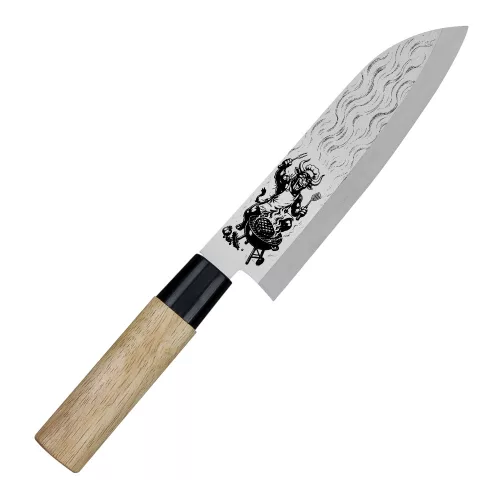

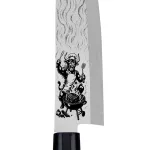
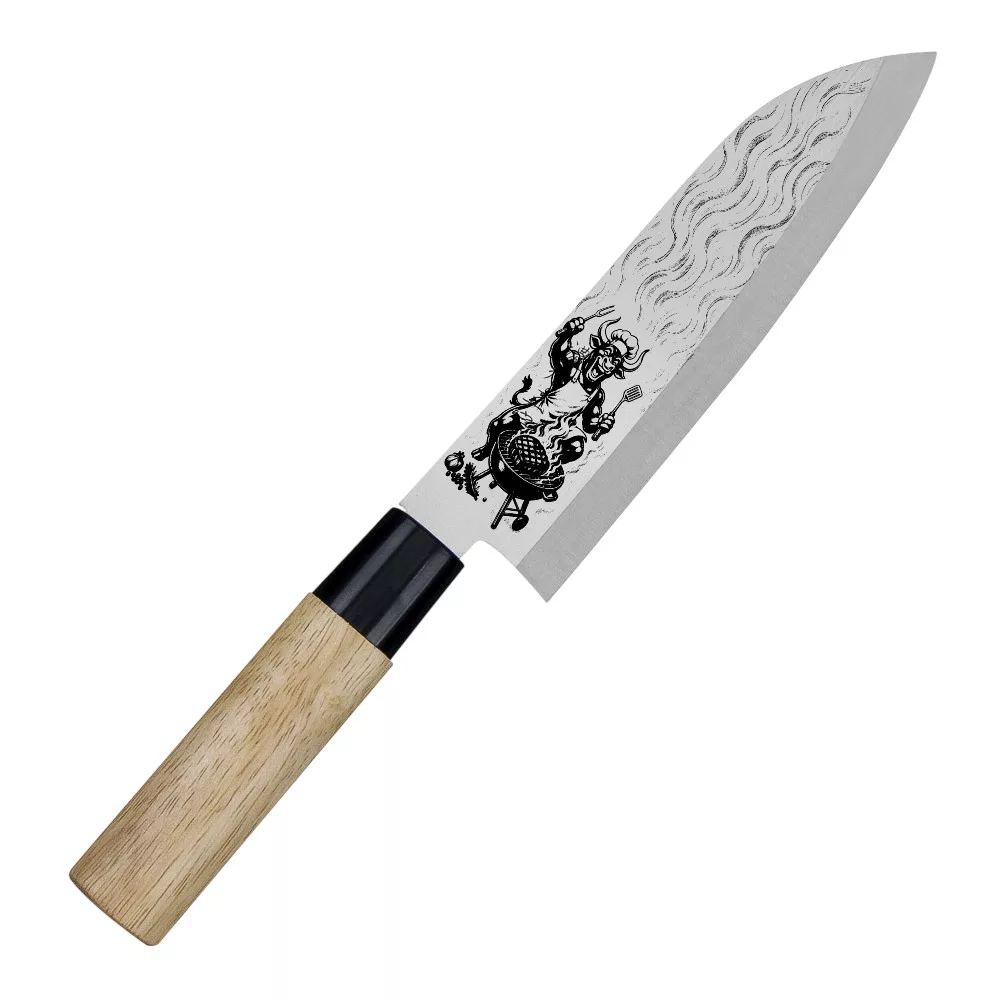
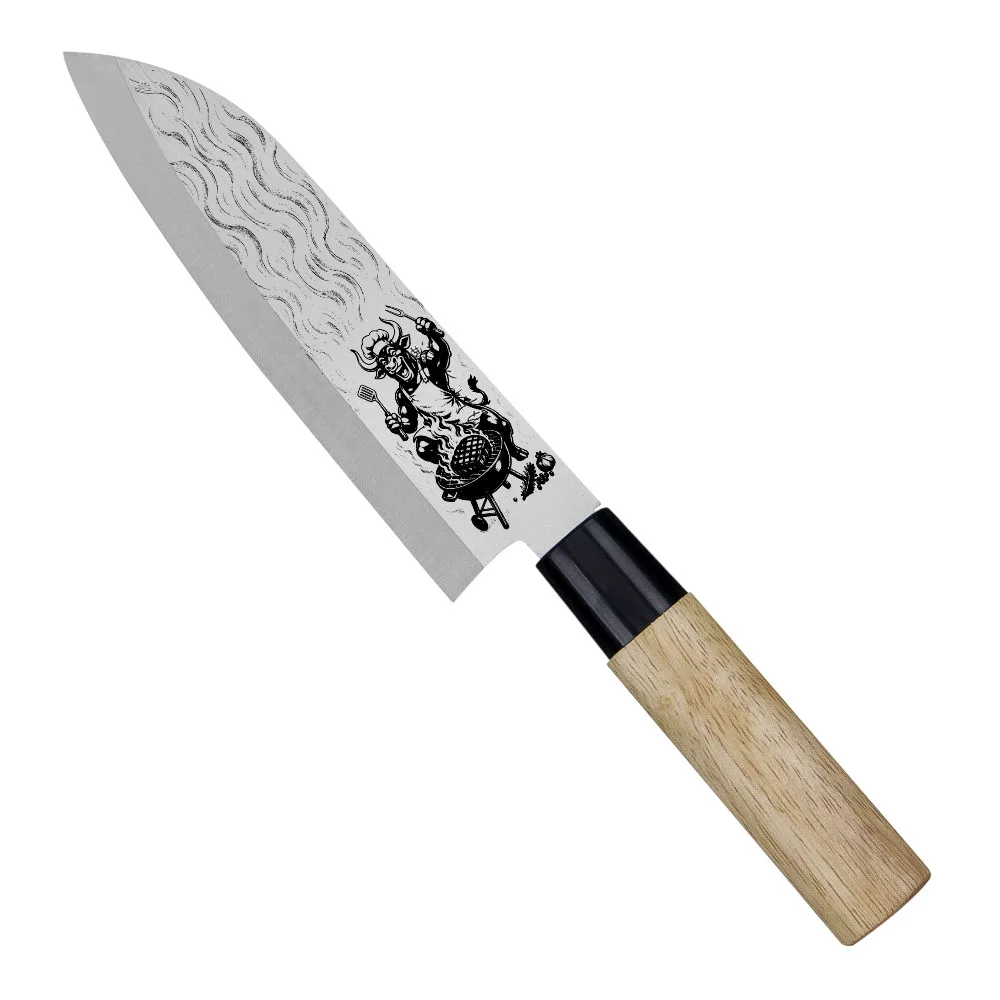
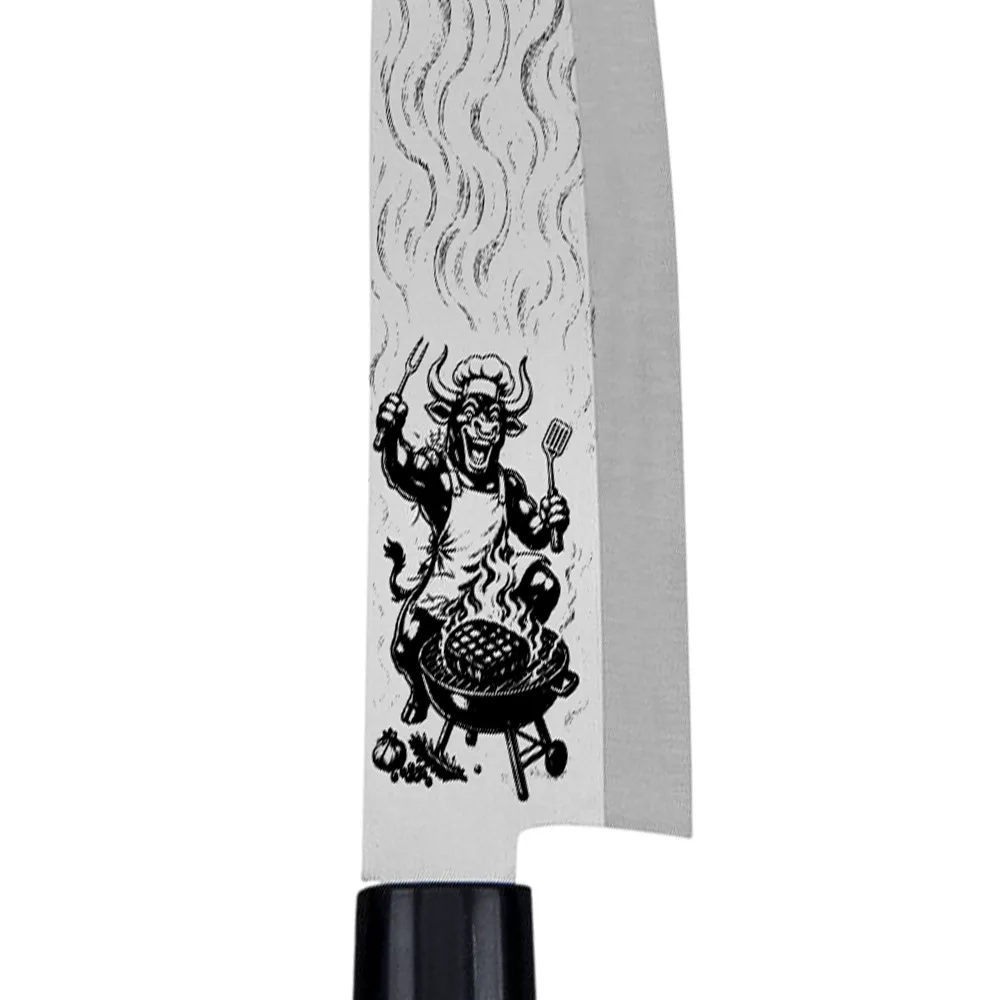
There are moments when grilling is not just preparing food, but a ceremony. When the embers glow, the scent of smoke fills the air, and the perfect, marbled steak is served. For this ritual, we have created a special edition of the Satake Santoku, with the best of all bulls on its blade proclaiming a passion for grilling!
Both sides of the knife are symmetrically engraved!
Blade material - U420J2 (Nippon Koshuha) stainless steel
Handle material - rubberwood
Hardness - 56 HRC
Total length - 30 cm
Blade length - 17 cm
Blade width - 4.5 cm
Blade thickness - approx. 1.7 mm
Edge grind - double-edged symmetrical
Weight - approx. 90 g
Manufacturer: Satake Cutlery Mfg. Co., Ltd. Made in Japan.
Item number: 801-614-gravirozott-steak-bull

66 $
Points earned after purchase:
3 $
We also recommend the following product as an accessory
Details
SATAKE MEGUMI SANTOKU JAPANESE KNIFE STEAK BULL ENGRAVING - 17 CM - THE VERSATILE KITCHEN MASTER

ADDITIONAL INFORMATION:
How to use Japanese chef knives correctly? (Click on the text to read the article.)
Modern Japanese knife making: Where tradition meets innovation (Click on the text to read the article.)
Look no further if you are seeking an unforgettable gift that combines practicality with artistic craftsmanship. The perfect gift is born in the spirit of quality and exclusivity: give a premium quality Satake Japanese knife, representing centuries of knife-making tradition. These kitchen masterpieces guarantee unparalleled sharpness and perfect balance, providing a great experience with every use.
BBQ is not just grilling, but a deep, smoky ritual of slow waiting over glowing embers and shared moments. When you hold a perfectly balanced Santoku knife, every step of preparation – the precise shaping of noble meats and the chopping of spices – becomes a meditative experience, a pure expression of care. This blade is the bridge between raw ingredients and culinary art, where every cut is a confident, joyful promise of the juicy bites to come - all accompanied by a true BBQ Bull!
Exceptional quality is ensured by a 100-watt MOPA laser machine, which allows for precise, deep, and high-contrast engraving, far surpassing traditional methods. It is made with sophisticated precision based on unique designs, guaranteeing a luxurious effect.
The Satake Megumi Santoku Japanese kitchen knife is a true all-rounder in the kitchen, a perfect choice for chopping vegetables, slicing meat, and even fish. The characteristic curved edge facilitates chopping with rocking motions, while the wide blade provides practical help for conveniently gathering and transferring chopped ingredients. The comfortable, elevated handle ensures that your fingers never touch the cutting board or the food, allowing you to use it with maximum safety and confidence while cooking.
The origin of the santoku (三徳) knife dates back to Japan during the Showa era (1926-1989). Changing eating habits, increasing red meat consumption, and the spread of Western cuisine necessitated the adaptation of Japanese kitchen knives. The direct predecessor of the santoku knife was the bunka knife, which was born from a combination of the characteristics of gyuto (meat) and nakiri (vegetable) knives.
The name "santoku" refers to the knife's three main areas of use, which is why it is often called the "knife of three virtues":
- Slicing: The santoku knife is excellent for slicing meat, fish, and vegetables thinly and evenly. The ideal blade length, usually between 15-18 cm, perfectly suits most ingredients.
- Dicing: The excellent edge of the santoku blade allows for extremely precise dicing of vegetables or other ingredients.
- Chopping: The special shape and optimal weight of the blade significantly facilitate the quick and efficient chopping of vegetables and herbs.
The popularity of the santoku knife spread worldwide at the end of the 20th century and has now become one of the essential and most popular knife types in modern kitchens. The Satake Megumi Santoku represents Japanese precision and quality, a reliable companion for everyday cooking.
Key Features:
- Satake Megumi Santoku Japanese knife
- 17 cm blade length
- Versatile use: vegetables, meat, fish
- Easy chopping thanks to the excellent edge
- Wide blade for moving cut materials
- Comfortable, elevated handle for safe use
STEEL COMPARISON CHART
|
Steel Type |
Category |
Composition (Main elements) |
Pros | Cons | Typical Use | Manufacturer |
| AUS-8A | Mid-range stainless steel |
Carbon: 0.70 - 0.75% Chromium: 13.00-14.50% Molybdenum: 0.10-0.30% Vanadium: 0.10-0.26% |
Good corrosion resistance: High chromium content. Easy to sharpen: Average hardness. Decent edge retention: Perfect for everyday use. Cost-effective: Common choice in mass production. |
Average edge retention: Requires sharpening with normal frequency. Lower wear resistance: Compared to harder Japanese steels. |
Kitchen knives. EDC pocket knives. Fixed blade knives. |
AICHI - JAPAN |
| FAX-38 |
High-Speed Steel (HSS) Special use steel Japanese carbon steel |
Carbon: 1.23-1.33% Tungsten: 5.70-6.70% Molybdenum: 4.70-5.30% Vanadium: 2.70-3.20% Cobalt: 8.00-8.80% |
Excellent wear resistance: Due to high hardness and alloying elements. Extreme edge retention: For demanding cutting tasks. High heat resistance: Retains hardness even at high temperatures.
|
Harder to sharpen: Due to extreme hardness. Higher price: Due to high alloy content and manufacturing technologies. Not stainless: Japanese carbon steel. Recommended for expert hands! |
Professional chef knives. Special knives where edge retention is key. Industrial cutting tools (e.g., drills, mills). |
NACHI FUJIKOSHI - JAPAN |
| MVS10Cob (DAMASCUS) | Cobalt-alloy stainless steel |
Carbon: 1.00% Chromium: 14.27% Cobalt: 1.34% Molybdenum: 0.96% Vanadium: 0.21% |
Excellent edge retention: Due to cobalt content. Excellent corrosion resistance: Through alloying. Balanced performance: For professional knives. Excellent toughness: Often compared to VG10 due to similar composition. |
Currently only available in Damascus version. More expensive than simpler stainless steels. |
High-end kitchen knives. Quality pocket knives. General-purpose knives where durable edge is needed. |
NACHI FUJIKOSHI - JAPAN |
| U420J2 | Low-carbon stainless steel |
Carbon: 0.15-0.36% Chromium: 12.00-14.00% Manganese: 1.00% Nickel: 1.00% Silicon: 1.00% Sulfur: 0.03% |
Excellent corrosion resistance: High chromium content. Easy to sharpen: Relatively soft. (Compared to other Japanese steels.) Very flexible: Resistant to breaking. Cost-effective: Basic Japanese stainless steel. |
Frequent sharpening: Compared to harder Japanese steels. |
Basic (home) kitchen knives. Diving knives (high corrosion resistance). Food industry tools. |
NIPPON KOSHUHA - JAPAN |
| Japanese Carbon Steel (Traditional) |
Carbon: 1.25-1.35% Manganese: 0.20-0.30% Phosphorus: 0.02% Silicon: 0.010-0.20% |
Extreme sharpness: Very fine grain structure and high carbon content. Easy to sharpen: Often sharper than many stainless steels. Excellent cutting performance: Base material for traditional Japanese knives. Patina formation: Characteristic surface develops over time. |
Prone to rusting: No chromium content. Maintenance-intensive: Requires careful cleaning and storage. Recommended for expert hands! |
High-quality Japanese kitchen knives. Straight razors. Uses where sharpness is paramount and maintenance is not an issue. |
HITACHI - JAPAN |
Bundle offers
Reviews
Be the first to write a review!
Similar products