

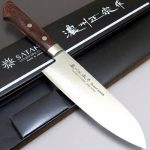
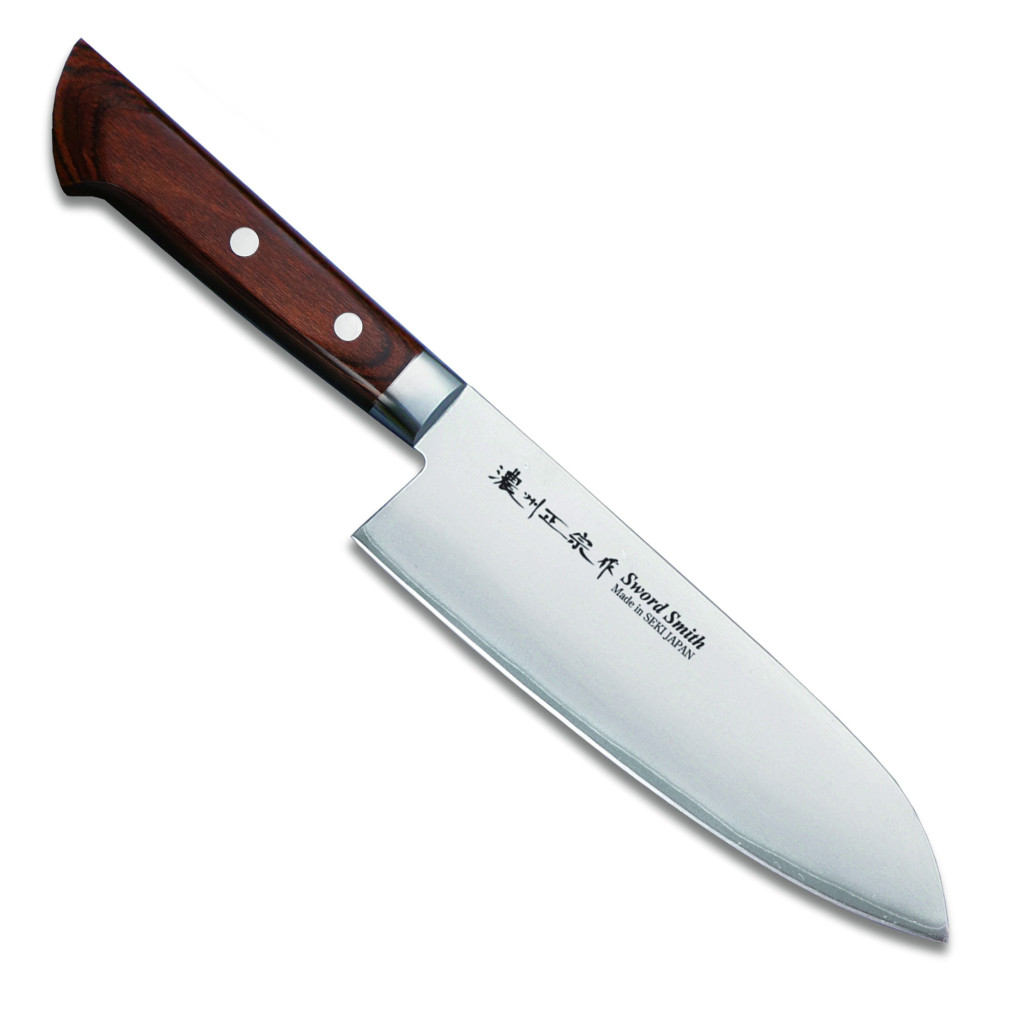
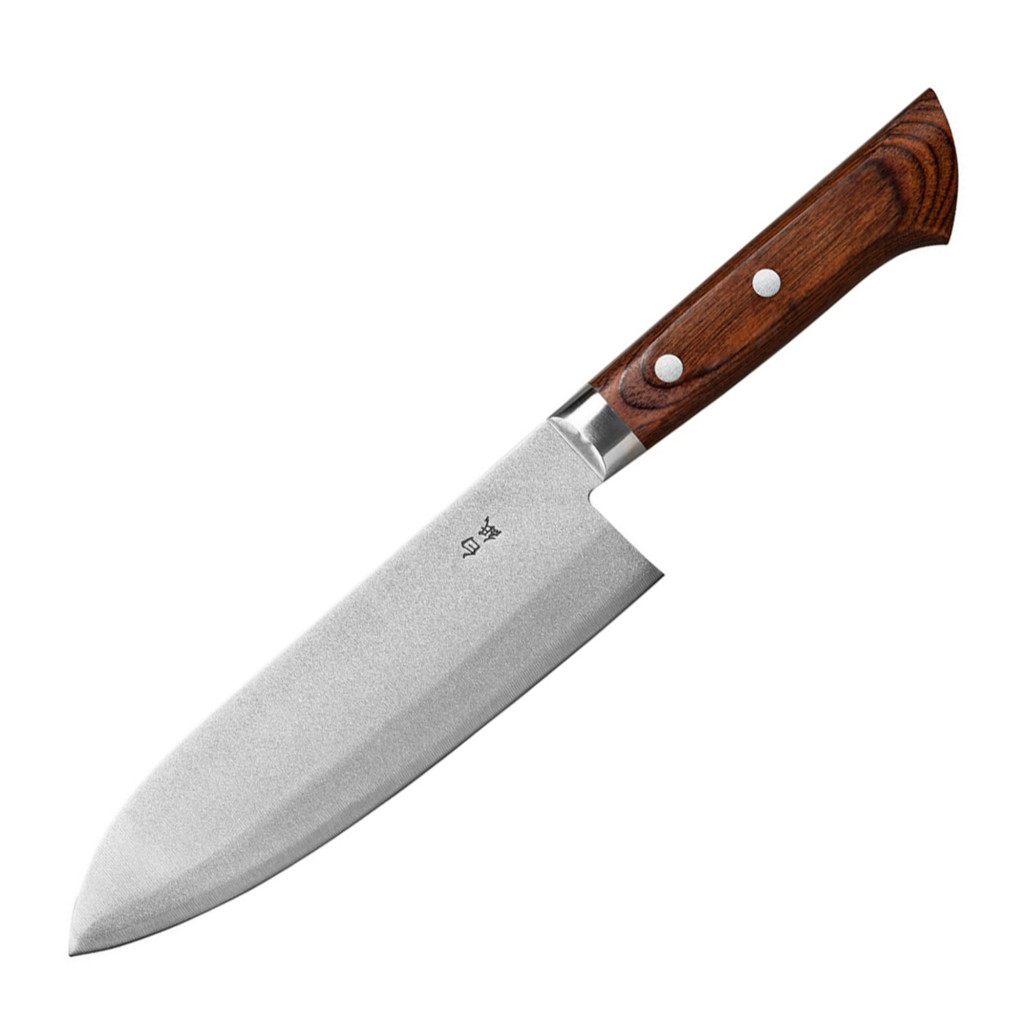
Satake Noushu Masamune Saku Shirogami 17 cm Santoku Chef's Knife with Mahogany Handle – Japanese Quality in the Kitchen
117 $
Satake Noushu Masamune Saku Shirogami 17 cm Santoku Chef's Knife with Mahogany Handle – Japanese Quality in the Kitchen
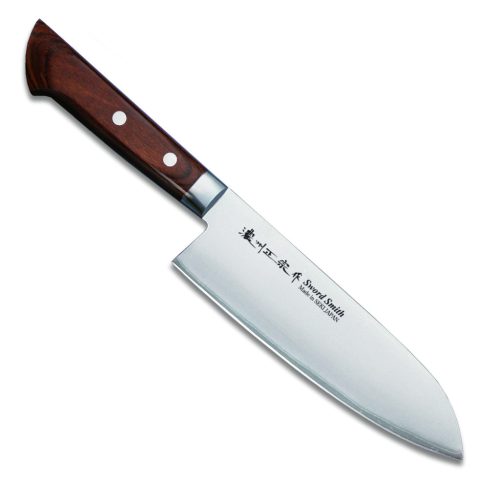

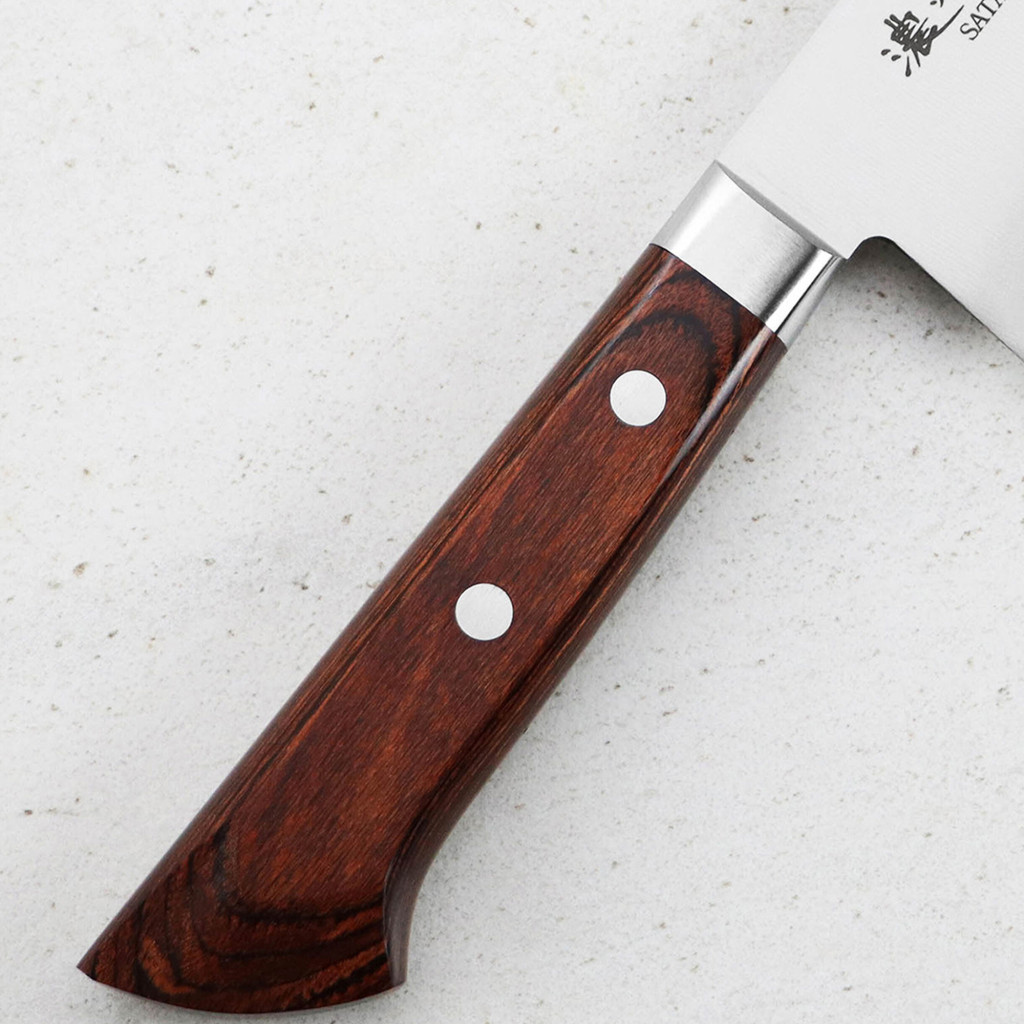
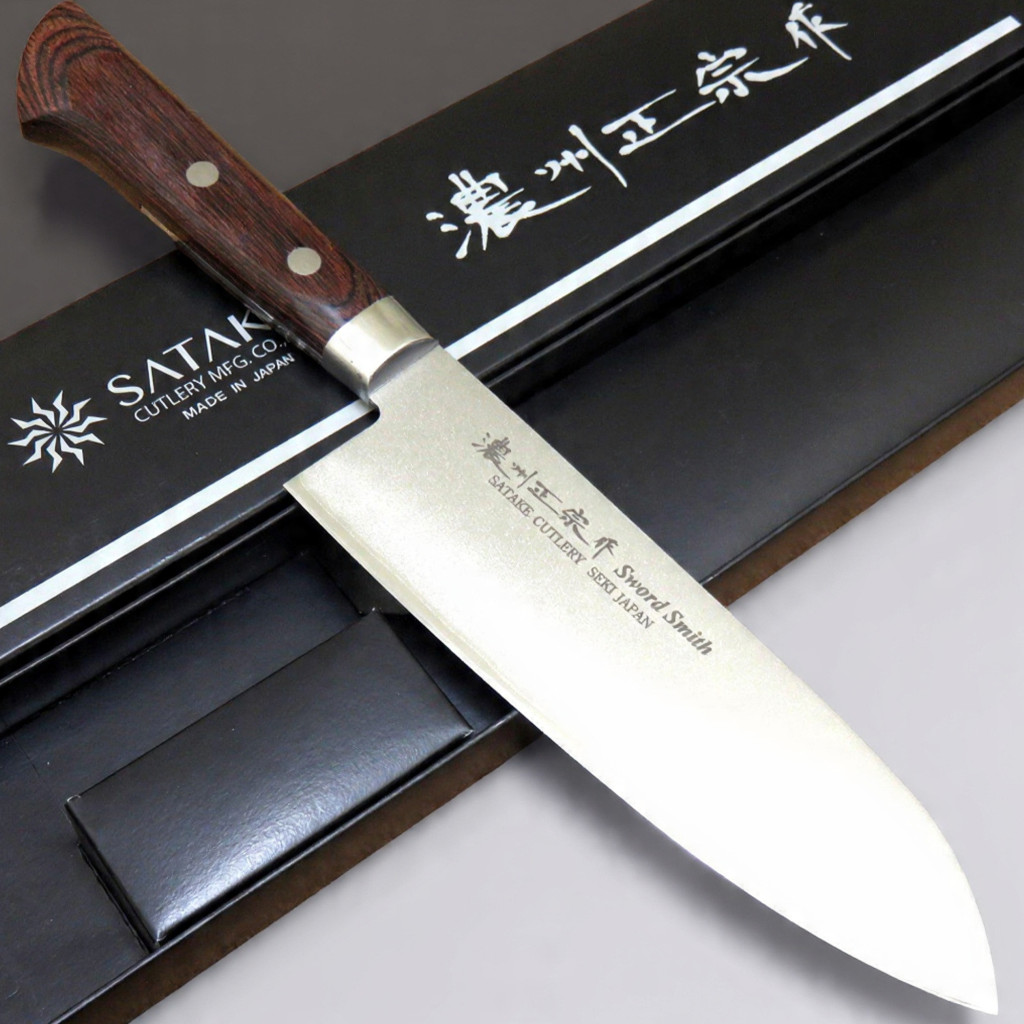
Blade material - Shirogami steel - carbon steel
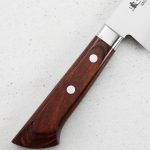
Handle material - mahogany
Hardness - 61-63 HRC
Total length - 29.5 cm
Blade length - 17 cm
Blade width - 4.9 cm
Blade thickness - approx. 1.5 mm
Edge grind - double-edged symmetrical
Weight - 160 g
Manufacturer: Satake Cutlery Mfg. Co., Ltd. Made in Japan.
Item number: 803-335
EAN: 4956617803335

117 $
Points earned after purchase:
6 $
We also recommend the following product as an accessory
Details
NOUSHU MASAMUNE SAKU SHIROGAMI 17 CM SANTOKU CHEF'S KNIFE WITH MAHOGANY HANDLE – JAPANESE QUALITY IN THE KITCHEN

ADDITIONAL INFORMATION:
How to use Japanese chef knives correctly? (Click on the text to read the article.)
Modern Japanese knife making: Where tradition meets innovation (Click on the text to read the article.)
The Noushu Masamune Saku Shirogami Santoku is an outstanding 17 cm Japanese multi-purpose kitchen knife that is guaranteed to become the centerpiece of your kitchen. This extremely versatile tool is perfectly suited for the precise processing of vegetables, fruits, meat, and fish. The Santoku's characteristic design and wide blade allow for stable guidance, enabling you to become a master of slicing, dicing, and chopping. The optimal blade length (17 cm) provides excellent maneuverability, making it easy to control even during finer, more intricate cutting tasks.
The blade is made of high-quality Shirogami steel (carbon steel), which guarantees exceptional sharpness and durability. The knife is completed by an elegant mahogany handle, which not only increases the aesthetic value of the knife but also ensures a comfortable and secure grip during use. The Noushu Masamune Saku Shirogami Santoku is an indispensable tool for every hobby and professional chef, the true soul of the kitchen.
The History of the Santoku Knife
The name "santoku" (三徳) literally translates to "three virtues," referring to the knife's versatility: it is excellent for cutting meat, fish, and vegetables. This type became popular in Japan in the mid-20th century as a fusion of traditional Japanese vegetable knives (nakiri) and Western-style chef's knives (gyuto).
The Santoku became the number one favorite in Japanese households because its shorter, lighter, and taller blade allows for more comfortable use even in smaller kitchens. Today, it has become the most popular type of Japanese knife worldwide.
Main Features:
- Noushu Masamune Saku Shirogami Santoku Japanese kitchen knife
- 17 cm blade length
- Blade material: Shirogami steel (carbon steel) for outstanding sharpness and durability
- Handle: Mahogany wood for a comfortable grip
- Versatile use: "the knife of three virtues" – for cutting meat, fish, and vegetables
- Wide blade profile: Helps stable control and scooping up chopped ingredients
- Optimal size: Easy handling and precise cutting experience
- An indispensable tool for every chef
STEEL COMPARISON TABLE
|
Steel Type |
Type |
Composition (Main elements) |
Pros | Cons | Typical Use | Manufacturer |
| AUS-8A | Mid-range stainless steel |
Carbon: 0.70 - 0.75% Chromium: 13.00-14.50% Molybdenum: 0.10-0.30% Vanadium: 0.10-0.26% |
Good corrosion resistance: High chromium content. Easy to sharpen: Average hardness. Decent edge retention: Perfect for everyday use. Cost-effective: Common choice for mass production. |
Standard edge retention: Requires normal sharpening frequency. Lower wear resistance: Compared to harder Japanese steels. |
Kitchen knives. Everyday carry knives. Fixed blade knives. |
AICHI - JAPAN |
| FAX-38 |
High Speed Steel (HSS) Special use steel Japanese carbon steel |
Carbon: 1.23-1.33% Tungsten: 5.70-6.70% Molybdenum: 4.70-5.30% Vanadium: 2.70-3.20% Cobalt: 8.00-8.80% |
Excellent wear resistance: Due to high hardness and alloys. Extraordinary edge retention: For demanding cutting tasks. High heat resistance: Retains hardness even at high temperatures.
|
Harder to sharpen: Due to extreme hardness. Higher price: Due to high alloy content and production technology. Not stainless: Japanese carbon steel. Recommended for expert hands! |
Professional chef knives. Special knives where edge retention is key. Industrial cutting tools (e.g., drills, mills). |
NACHI FUJIKOSHI - JAPAN |
| MVS10Cob (DAMASCUS) | Cobalt-alloyed stainless steel |
Carbon: 1.00% Chromium: 14.27% Cobalt: 1.34% Molybdenum: 0.96% Vanadium: 0.21% |
Excellent edge retention: Due to cobalt content. Excellent corrosion resistance: Through the alloys. Balanced performance: For professional knives. Excellent toughness: Often compared to VG10 due to similar composition. |
Currently only available in Damascus version. More expensive than simpler stainless steels. |
High-end kitchen knives. Quality pocket knives. General purpose knives requiring durable edge. |
NACHI FUJIKOSHI - JAPAN |
| U420J2 | Low carbon stainless steel |
Carbon: 0.15-0.36% Chromium: 12.00-14.00% Manganese: 1.00% Nickel: 1.00% Silicon: 1.00% Sulfur: 0.03% |
Excellent corrosion resistance: High chromium content. Easy to sharpen: Relatively soft (compared to other Japanese steels). Very flexible: Hard to break. Cost-effective: Basic Japanese stainless steel. |
Frequent sharpening: Compared to harder Japanese steels. |
Basic (home) kitchen knives. Diving knives (high corrosion resistance). Food industry equipment. |
NIPPON KOSHUHA - JAPAN |
| Japanese Carbon Steel (Traditional) |
Carbon: 1.25-1.35% Manganese: 0.20-0.30% Phosphorus: 0.02% Silicon: 0.010-0.20% |
Extreme sharpness: Very fine grain structure and high carbon content. Easy to sharpen: Often sharper than many stainless steels. Excellent cutting performance: Base material for traditional Japanese knives. Patina formation: A characteristic surface develops over time. |
Prone to rust: No chromium content. High maintenance: Requires careful cleaning and storage. Recommended for expert hands! |
High-quality Japanese kitchen knives. Razor blades. Applications where sharpness is paramount and maintenance is not an issue. |
HITACHI - JAPAN |
Data
Blade length
Blade Width
Blade Thickness
Blade material
Hardness
Handle material
Overall length
Grind
Weight
Item number
803-335
Weight
160 g/db
Bundle offers
Reviews
Be the first to write a review!
Similar products