

Satake Unique Sai Japanese Damascus Santoku Knife 17cm - Japanese Quality in Your Kitchen
180 $
Satake Unique Sai Japanese Damascus Santoku Knife 17cm - Japanese Quality in Your Kitchen

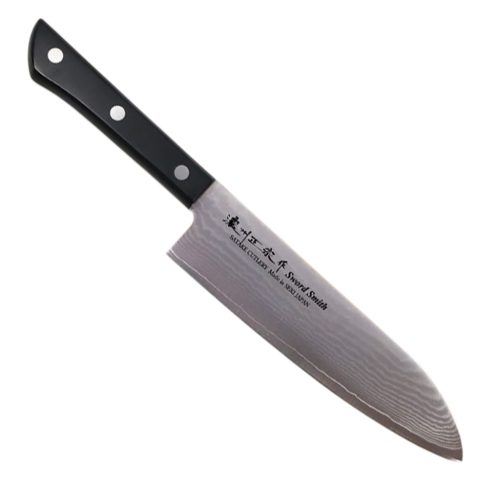

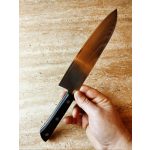
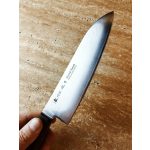
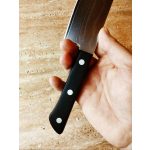
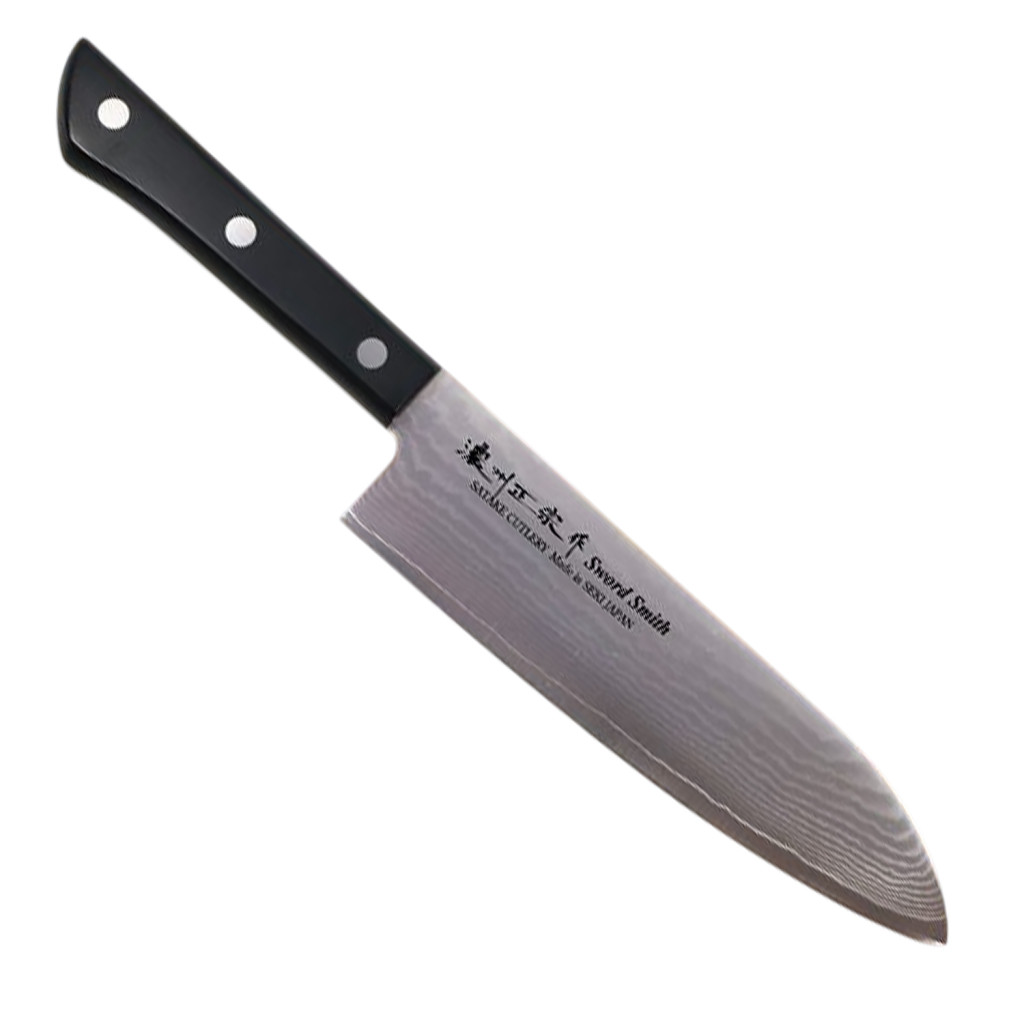
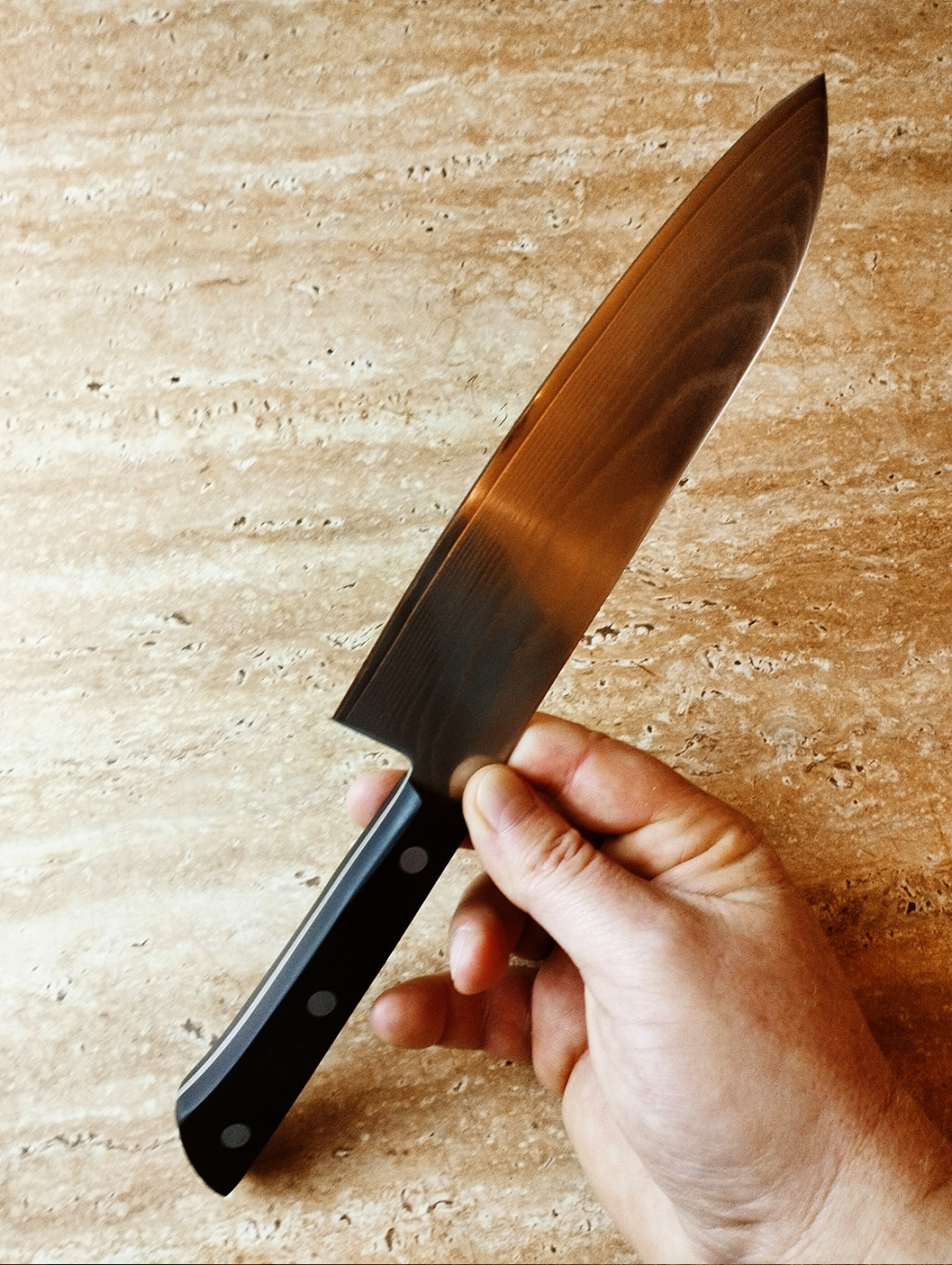
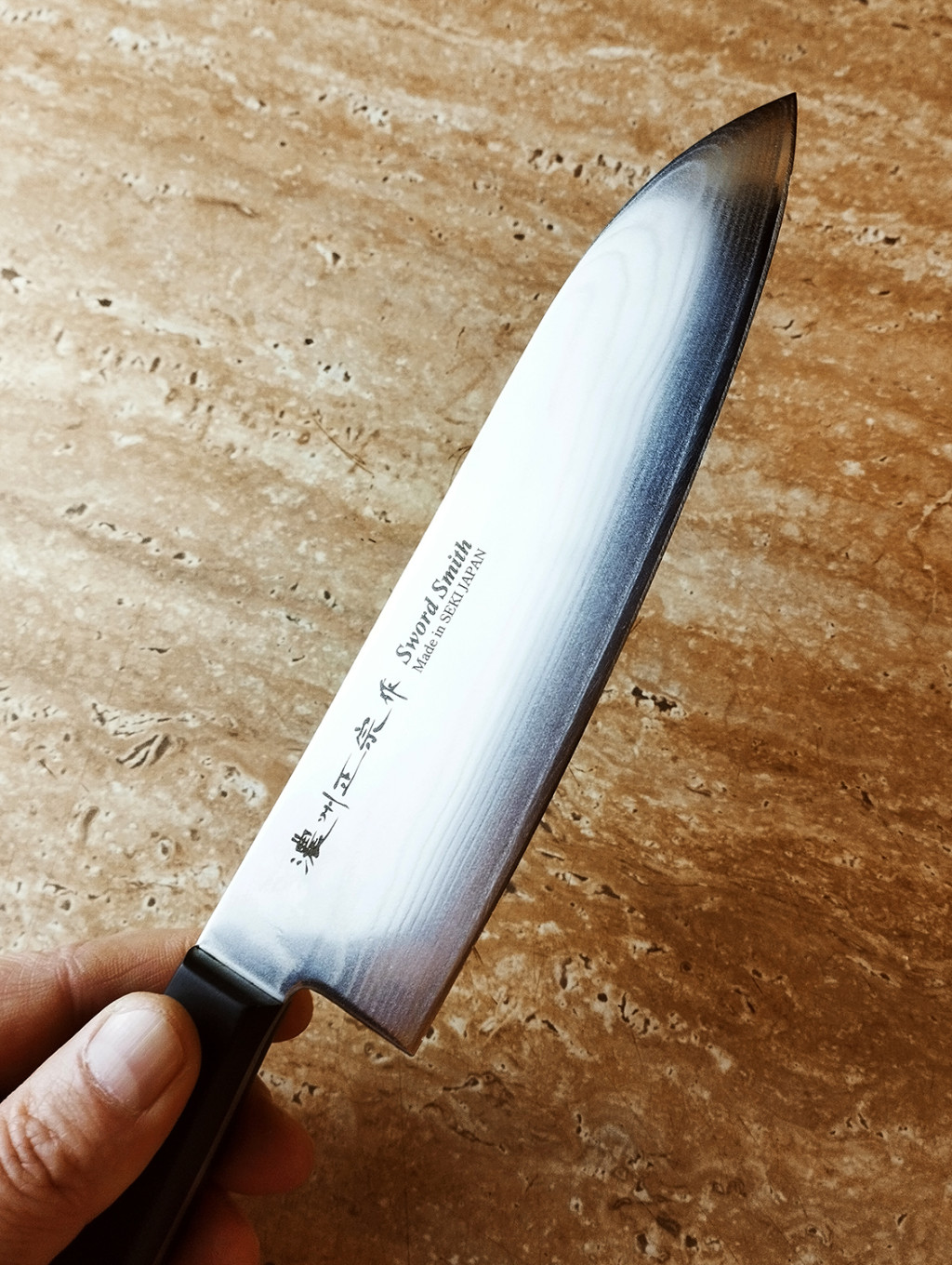
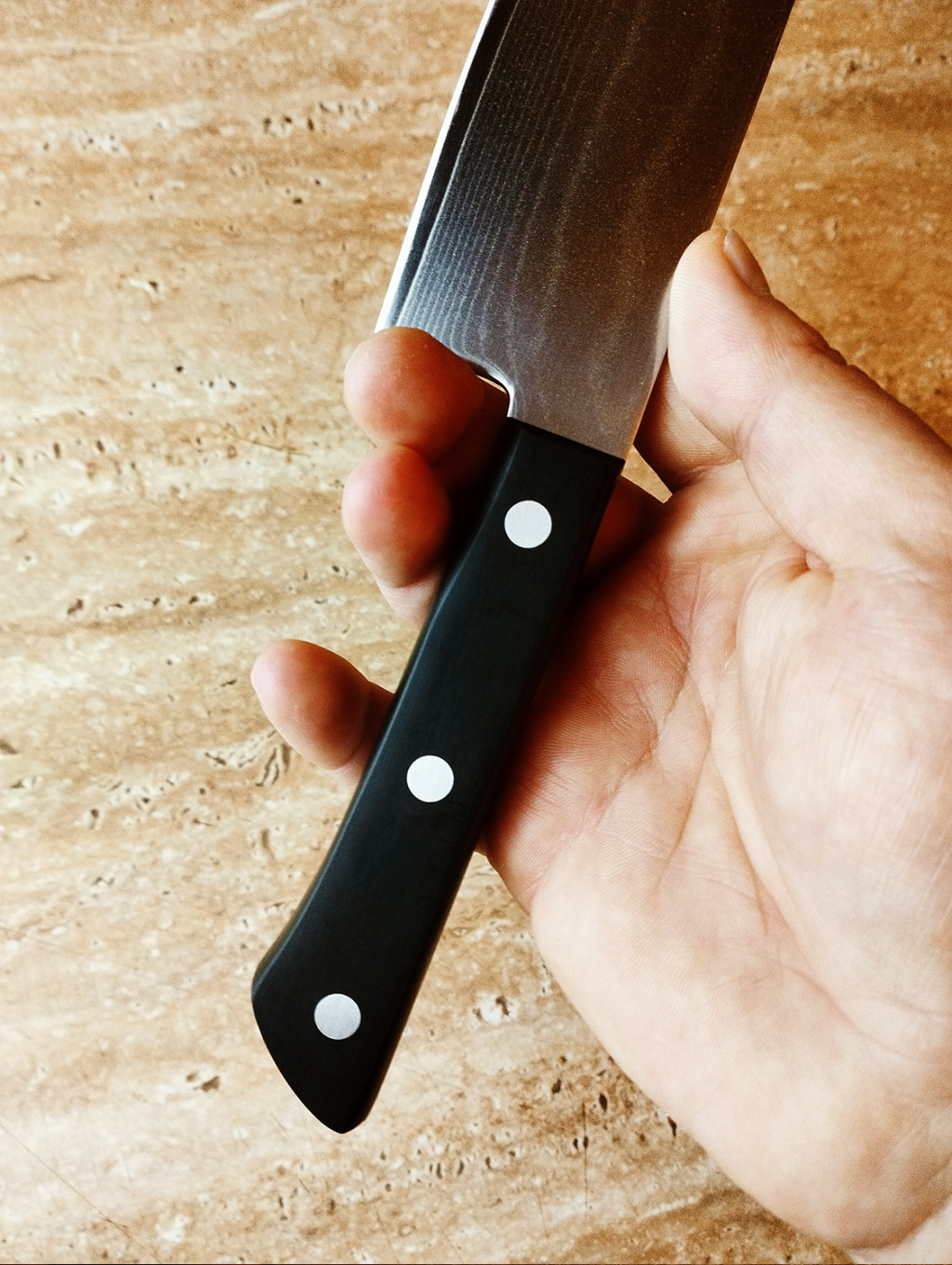
Blade material - 69-layer forged Damascus stainless steel with VG-10 core
Handle material - ABS plastic laminate
Hardness - 60 HRC +/- 1
Total length - 30 cm
Blade length - 18.0 cm
Blade width - 4.5 cm
Blade thickness - 1.8 mm
Edge grind - Double-edged symmetrical
Weight - approx. 150 g
Manufacturer: Satake Cutlery Mfg. Co., Ltd. Made in Japan.
Item number: 806-947

180 $
Points earned after purchase:
9 $
We also recommend the following product as an accessory
Details
SATAKE NOUSHU FORGED JAPANESE DAMASCUS SANTOKU CHEF'S KNIFE - 18 CM - THE VERSATILE ARTIST OF THE KITCHEN

ADDITIONAL INFORMATION:
How to correctly use Japanese chef's knives? (The article is available by clicking on the text.)
Modern Japanese Knife Making: Where Tradition Meets Innovation (The article is available by clicking on the text.)
The Satake Noushu Santoku Damascus kitchen knife is a stunning encounter between traditional craftsmanship and cutting-edge technology. This exceptional Japanese kitchen knife with an 18 cm blade length is not just a tool, but a symbol of culinary precision and elegance. Whether it’s chopping vegetables or finely slicing meat or fish, the Satake Noushu Santoku provides a professional experience with every cut.
The heart of the blade is an extremely hard VG-10 stainless steel core, surrounded by 34-34 layers of softer steel on each side, creating the dazzling 69-layer forged Damascus structure. This construction is not only aesthetically stunning but also ensures the blade's flexibility and the durability of its razor-sharp edge.
The meaning of the name Santoku (三徳):
"three virtues". This name refers to the knife's three main functions: slicing, dicing, and mincing.
- Versatility: The 18 cm blade length creates an ideal balance between controllability and efficiency.
- Practicality: The wide blade surface not only provides stable guidance but is also excellent as a spatula for lifting chopped ingredients into the pan.
- Ergonomics: The Satake Noushu features an ABS plastic laminate handle, which is moisture-resistant, hygienic, and guarantees a comfortable, secure grip even during long-term use.
Key Features:
- Type: Satake Noushu Japanese Santoku knife
- Blade Length: 18 cm (extra efficiency for slicing)
- Blade Construction: 69-layer forged Damascus stainless steel
- Core: Premium VG-10 steel for outstanding edge retention
- Handle: Durable ABS plastic laminate
- Usage: Precise processing of meat, fish, and vegetables
- Design: Unique Damascus pattern that makes it a jewel in any kitchen
The Satake Noushu Damascus Santoku kitchen knife is an essential piece for the modern kitchen, bringing the centuries-old tradition of Seki, Japan, to your home in a modern form.
KNIFE STEEL COMPARISON TABLE
|
Steel Type |
Type |
Composition (Main elements) |
Pros | Cons | Typical Use | Manufacturer |
| AUS-8A | Mid-range stainless steel |
Carbon: 0.70 - 0.75% Chromium: 13.00-14.50% Molybdenum: 0.10-0.30% Vanadium: 0.10-0.26% |
Good corrosion resistance: High chromium content. Easy to sharpen: Average hardness. Adequate edge retention: Perfect for everyday use. Cost-effective: Common choice for mass production. |
Average edge retention: Requires normal frequency of sharpening. Lower wear resistance: Compared to harder Japanese steels. |
Kitchen knives. Everyday carry pocket knives. Fixed blade knives. |
AICHI - JAPAN |
| FAX-38 |
High Speed Steel (HSS) Special purpose steel Japanese carbon steel |
Carbon: 1.23-1.33% Tungsten: 5.70-6.70% Molybdenum: 4.70-5.30% Vanadium: 2.70-3.20% Cobalt: 8.00-8.80% |
Excellent wear resistance: Due to high hardness and alloying elements. Extraordinary edge retention: For demanding cutting tasks. High heat resistance: Maintains hardness even at high temperatures.
|
Harder to sharpen: Due to extreme hardness. Higher price: Due to high alloy content and manufacturing technologies. Not stainless: Japanese carbon steel. Recommended for expert hands! |
Professional chef's knives. Specialty knives where edge retention is key. Industrial cutting tools (e.g., drills, milling cutters). |
NACHI FUJIKOSHI - JAPAN |
| MVS10Cob (DAMASCUS) | Cobalt-alloyed stainless steel |
Carbon: 1.00% Chromium: 14.27% Cobalt: 1.34% Molybdenum: 0.96% Vanadium: 0.21% |
Good edge retention: Due to cobalt content. Good corrosion resistance: Through the alloys. Balanced performance: For professional knives. Good toughness: Often compared to VG10 due to similar composition. |
Currently only available in Damascus version. More expensive than simpler stainless steels. |
High-end kitchen knives. Quality pocket knives. General purpose knives where a durable edge is needed. |
NACHI FUJIKOSHI - JAPAN |
| U420J2 | Low carbon stainless steel |
Carbon: 0.15-0.36% Chromium: 12.00-14.00% Manganese: 1.00% Nickel: 1.00% Silicon: 1.00% Sulfur: 0.03% |
Excellent corrosion resistance: High chromium content. Easy to sharpen: Relatively soft (compared to other Japanese steels). Very flexible: Hard to break. Cost-effective: Basic Japanese stainless steel. |
Frequent sharpening: Compared to harder Japanese steels. |
Entry-level (home) kitchen knives. Diving knives (high corrosion resistance). Food industry equipment. |
NIPPON KOSHUHA - JAPAN |
| Japanese Carbon Steel (Traditional) |
Carbon: 1.25-1.35% Manganese: 0.20-0.30% Phosphorus: 0.02% Silicon: 0.010-0.20% |
Extreme sharpness: Very fine grain structure and high carbon content. Easy to sharpen: Often sharper than many stainless steels. Excellent cutting performance: Base material for traditional Japanese knives. Patina formation: Develops a distinctive surface over time. |
Prone to rust: No chromium content. Maintenance intensive: Requires careful cleaning and storage. Recommended for expert hands! |
High-quality Japanese kitchen knives. Razors. Uses where sharpness is paramount and maintenance is not an issue. |
HITACHI - JAPAN | |
| VG-10
|
Premium stainless steel |
Carbon: 0.95-1.05% Chromium: 14.50-15.50% Cobalt: 1.30-1.50% Vanadium: 0.10-0.30% Molybdenum: 0.90-1.20%
|
Excellent edge retention: Due to cobalt content. Good corrosion resistance: Through the alloys. Balanced performance: For professional knives. Excellent toughness: Often compared to MVS10Cob due to similar composition.
|
Currently only available in Damascus version. More expensive than simpler stainless steels.
|
High-end kitchen knives. Quality pocket knives. General purpose knives where a durable edge is needed.
|
TAKEFU-JAPAN |
Data
Blade length
Blade Width
Blade Thickness
Hardness
Handle material
Overall length
Grind
Weight
Item number
806-947
Weight
150 g/db
Bundle offers
Reviews
Be the first to write a review!
Similar products