

Satake Sword Smith Titan Santoku Knife 17 cm - Japanese Quality in Your Kitchen
40 $
Satake Sword Smith Titan Santoku Knife 17 cm - Japanese Quality in Your Kitchen

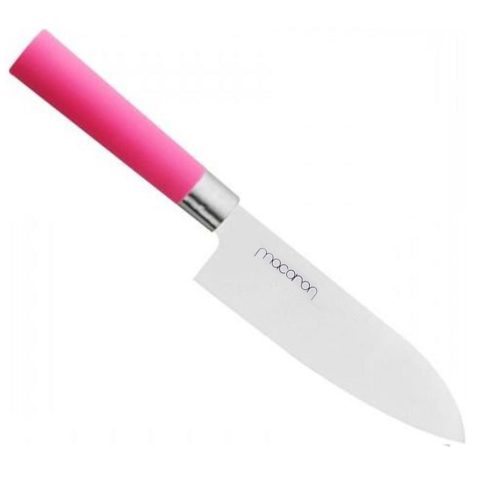


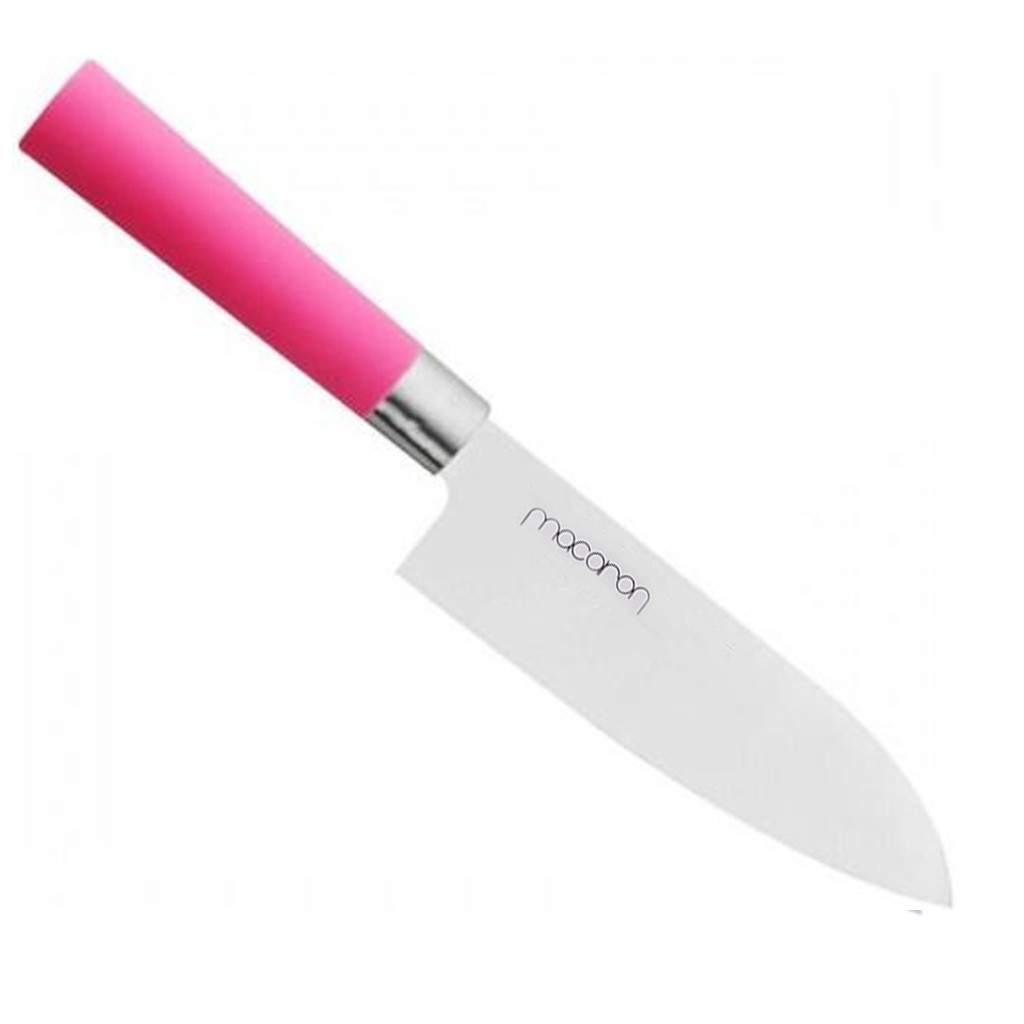
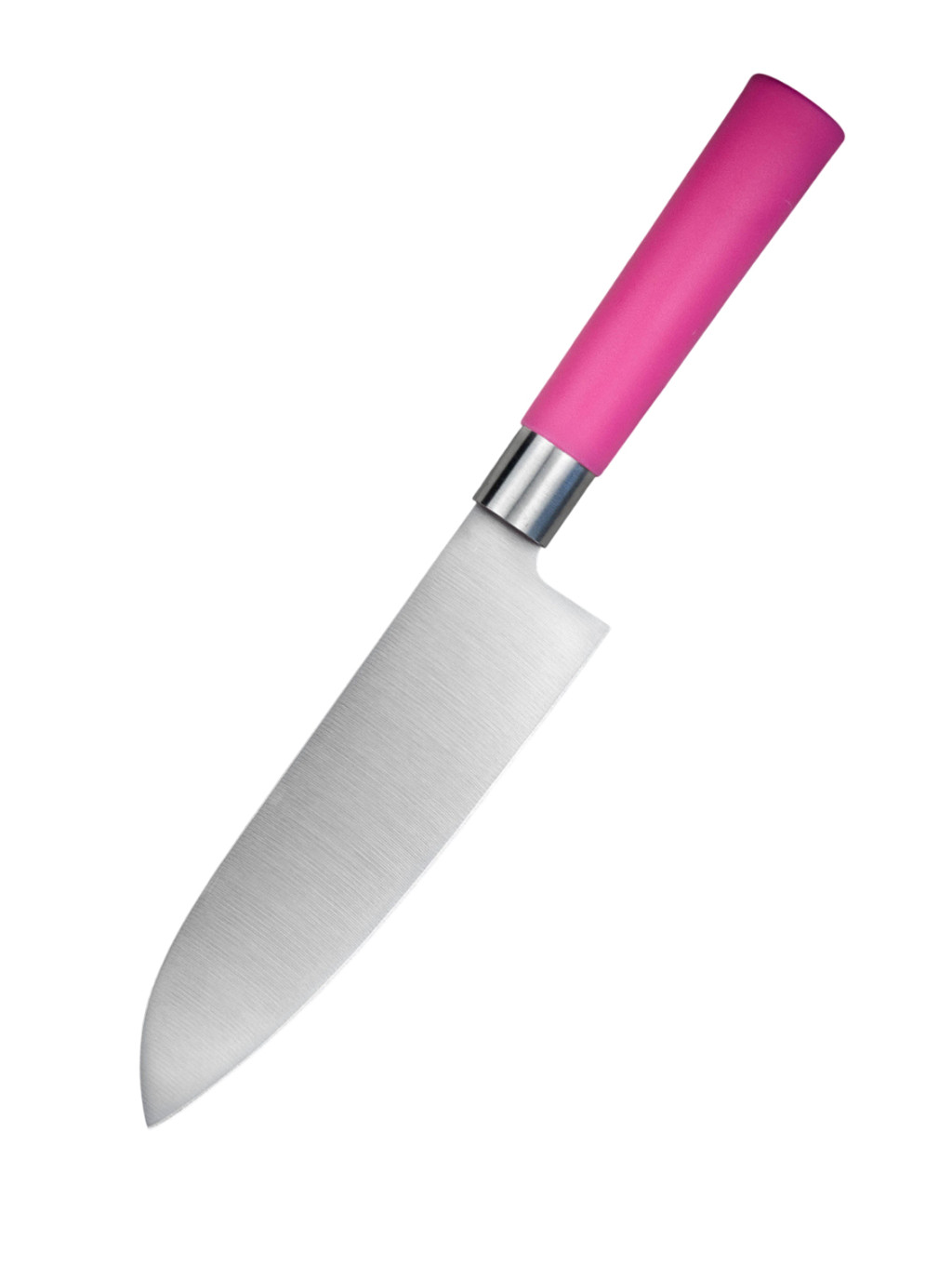
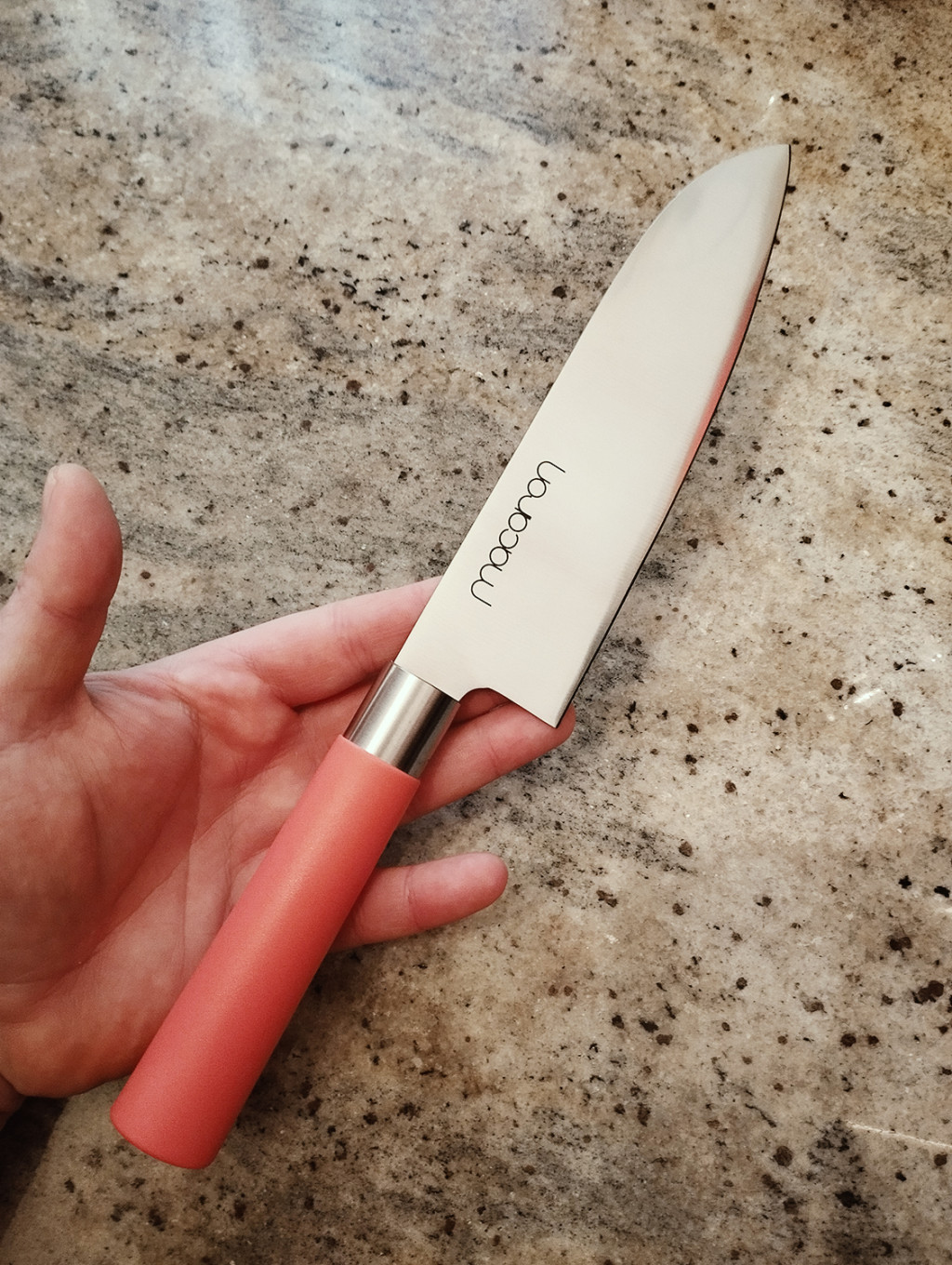
Blade - AUS-8A stainless steel
Handle - polypropylene with stainless steel ring
Hardness - 56-58 HRC
Total length - 30 cm
Blade length - 17 cm
Blade width - 4.5 cm
Blade thickness - 1.5 mm
Sharpening method - double-edged symmetrical grind
Weight - approx. 106 g
Manufacturer: Satake Cutlery Mfg. Co., Ltd. Made in Japan.
Article number: 805-179
EAN: 4956617805179

40 $
Points earned after purchase:
2 $
We also recommend the following product as an accessory
Details
SATAKE SWORD SMITH MACARON SANTOKU KNIFE - 17 CM - THE PINK KITCHEN SAMURAI

ADDITIONAL INFORMATION:
How to correctly use Japanese chef knives? (Article available by clicking on the text.)
Modern Japanese knife making: Tradition meets innovation (Article available by clicking on the text.)
The Satake Sword Smith Macaron Santoku is not just a knife, but your most stylish ally in gastronomic battles. This 17 cm beauty proves that professionalism and fun can indeed share a cutting board: behind the striking pink handle lies a true Japanese precision tool.
What is a "Santoku"? – The Legend of Three Virtues
The word "Santoku" (三徳) literally means: "three virtues". No, it doesn't mean the knife is patient, kind, and good at keeping secrets (though who knows?). The name refers to the three main pillars of Japanese culinary art: meat, fish, and vegetables.
Why will you love it?
- Featherweight champion: Only 106 grams. This means you'll get tired of reading the recipe before you get tired of slicing. It feels as light as holding a sheet of paper, yet it cuts like a laser.
- Advantages of the Santoku shape: With the characteristic curved edge, you can rock on the cutting board like a professional chef, and the wide blade functions as a shovel. Once finished with chopping, simply sweep the onions onto the blade and straight into the pot – no more scooping with your fingers!
- Finger protection at its best: The raised, ergonomic handle ensures your fingers don't clatter against the cutting board. It keeps a safe distance from the work area, so even your manicure will be grateful.
Key Features:
- Model: Satake Sword Smith Macaron Santoku
- Blade length: 17 cm
- Weight: Featherlight 106 g – say goodbye to wrist pain!
- Three Virtues: Masterful performance for meat, fish, and vegetables.
- Style: Iconic pink handle that brightens up every kitchen.
- Origin: Japanese quality with a touch of Macaron lifestyle.
Whether for professional chefs or for home use, whether it's a quick dinner or a more complex feast, you won't want to reach for any other knife after the Satake Macaron Santoku. Because who said a professional tool can't be incredibly cute at the same time?
KNIFE STEEL COMPARISON TABLE
|
Steel Type |
Type |
Composition (Main elements) |
Pros | Cons | Typical Use | Manufacturer |
| AUS-8A | Mid-range stainless steel |
Carbon: 0.70 - 0.75% Chromium: 13.00-14.50% Molybdenum: 0.10-0.30% Vanadium: 0.10-0.26% |
Good corrosion resistance: High chromium content. Easy to sharpen: Average hardness. Decent edge retention: Perfect for everyday use. Cost-effective: Common choice for mass production. |
General edge retention: Requires normal frequency of sharpening. Lower wear resistance: Compared to harder Japanese steels. |
Kitchen knives. Everyday carry pocket knives. Fixed blade knives. |
AICHI - JAPAN |
| FAX-38 |
High Speed Steel (HSS) Special use steel Japanese carbon steel |
Carbon: 1.23-1.33% Tungsten: 5.70-6.70% Molybdenum: 4.70-5.30% Vanadium: 2.70-3.20% Cobalt: 8.00-8.80% |
Excellent wear resistance: Due to high hardness and alloying elements. Extraordinary edge retention: For demanding cutting tasks. High heat resistance: Retains hardness even at high temperatures.
|
Harder to sharpen: Due to extreme hardness. Higher price: Due to high alloying content and production technologies. Not stainless: Japanese carbon steel. Recommended for expert hands! |
Professional chef knives. Special knives where edge retention is key. Industrial cutting tools (e.g., drills, milling cutters). |
NACHI FUJIKOSHI - JAPAN |
| MVS10Cob (DAMASCUS) | Cobalt-alloyed stainless steel |
Carbon: 1.00% Chromium: 14.27% Cobalt: 1.34% Molybdenum: 0.96% Vanadium: 0.21% |
Good edge retention: Due to cobalt content. Adequate corrosion resistance: Thanks to the alloys. Balanced performance: For professional knives. Good toughness: Often compared to VG10 due to similar composition. |
Currently only available in Damascus version. More expensive than simple stainless steels. |
High-end kitchen knives. Quality pocket knives. General-purpose knives where durable edge is needed. |
NACHI FUJIKOSHI - JAPAN |
| U420J2 | Low carbon stainless steel |
Carbon: 0.15-0.36% Chromium: 12.00-14.00% Manganese: 1.00% Nickel: 1.00% Silicon: 1.00% Sulfur: 0.03% |
Excellent corrosion resistance: High chromium content. Easy to sharpen: Relatively soft (compared to other Japanese steels). Very flexible: Hard to break. Cost-effective: Basic Japanese stainless steel. |
Frequent sharpening: Compared to harder Japanese steels. |
Basic (home) kitchen knives. Diving knives (high corrosion resistance). Food industry tools. |
NIPPON KOSHUHA - JAPAN |
| Japanese carbon steel (Traditional) |
Carbon: 1.25-1.35% Manganese: 0.20-0.30% Phosphorus: 0.02% Silicon: 0.010-0.20% |
Extreme sharpness: Very fine grain structure and high carbon content. Easy to sharpen: Often sharper than many stainless steels. Excellent cutting performance: Raw material for traditional Japanese knives. Patina formation: Develops a characteristic surface over time. |
Prone to rusting: No chromium content. Maintenance intensive: Requires careful cleaning and storage. Recommended for expert hands! |
High-quality Japanese kitchen knives. Straight razors. Uses where sharpness is paramount and maintenance is not an issue. |
HITACHI - JAPAN |
Data
Blade length
Blade Width
Blade Thickness
Blade material
Hardness
Handle material
Overall length
Grind
Weight
Item number
805-179
Weight
126 g/db
Bundle offers
Reviews
Be the first to write a review!
Similar products