

Satake Megumi Universal Japanese Kitchen Knife 12 cm - Japanese Quality in Your Kitchen
77 £
Satake Megumi Universal Japanese Kitchen Knife 12 cm - Japanese Quality in Your Kitchen

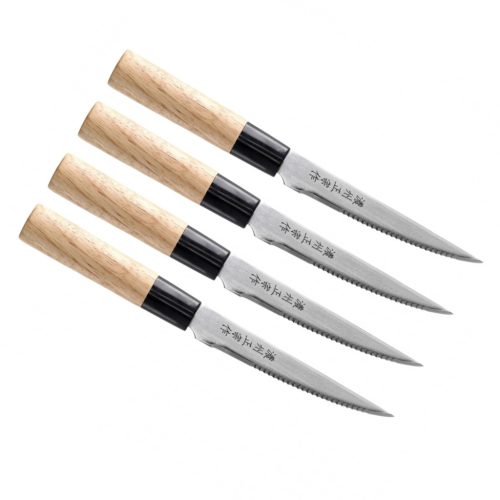

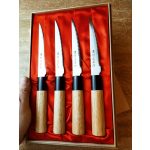
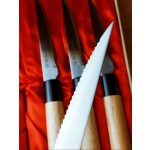
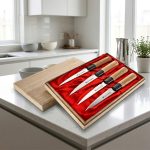
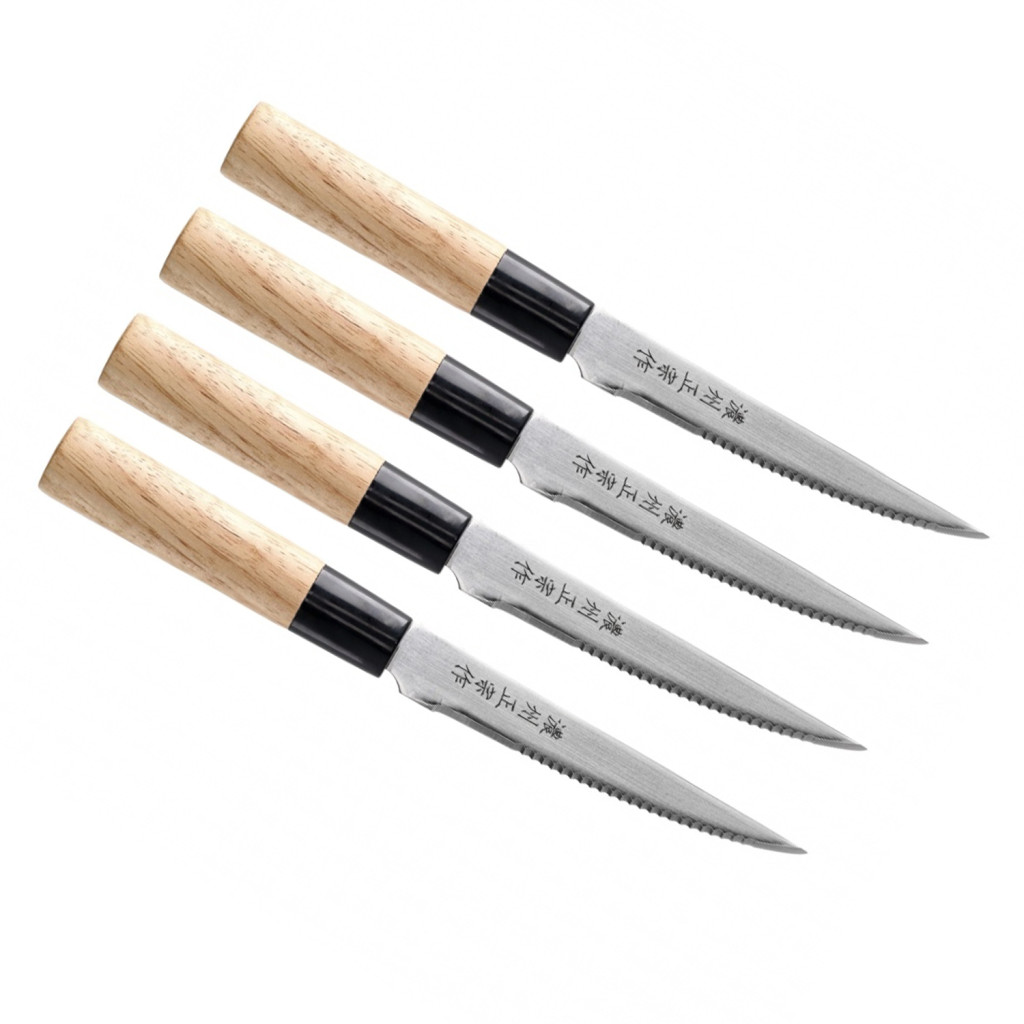
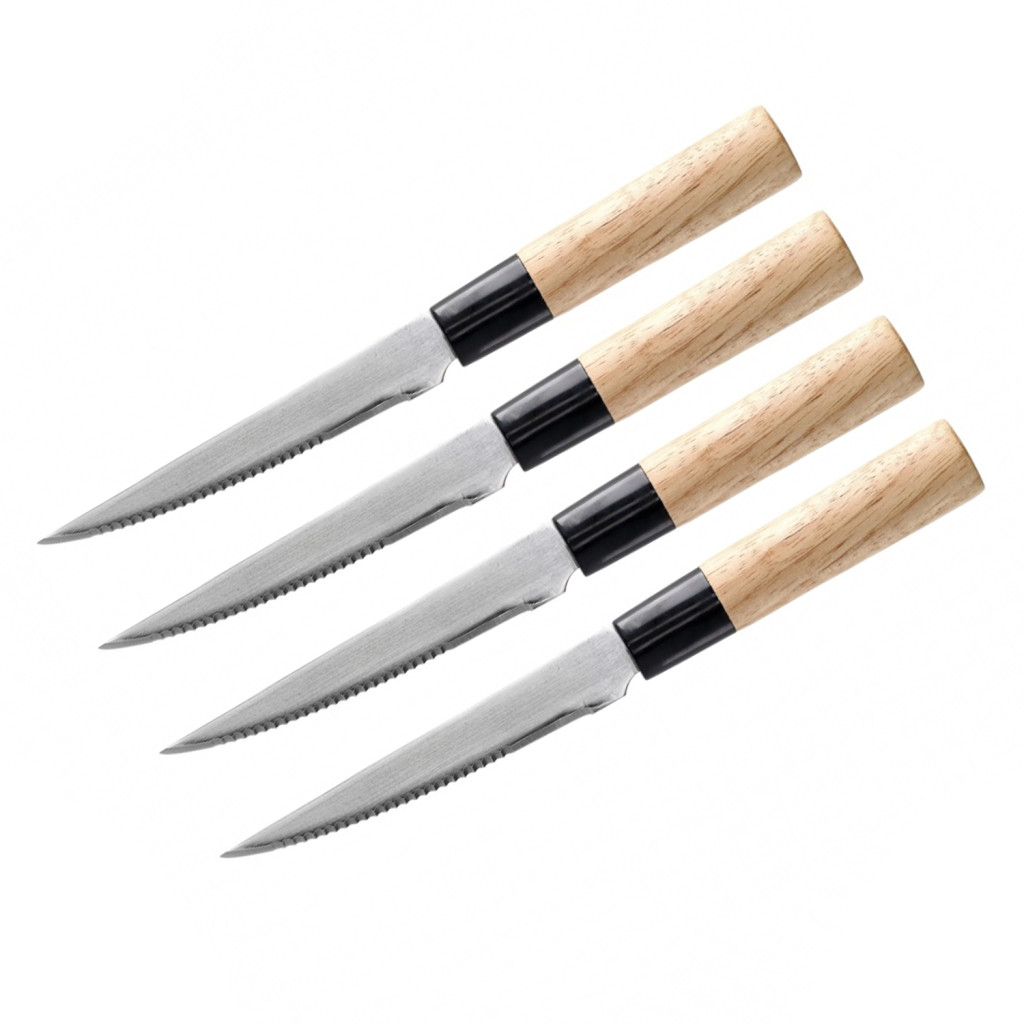
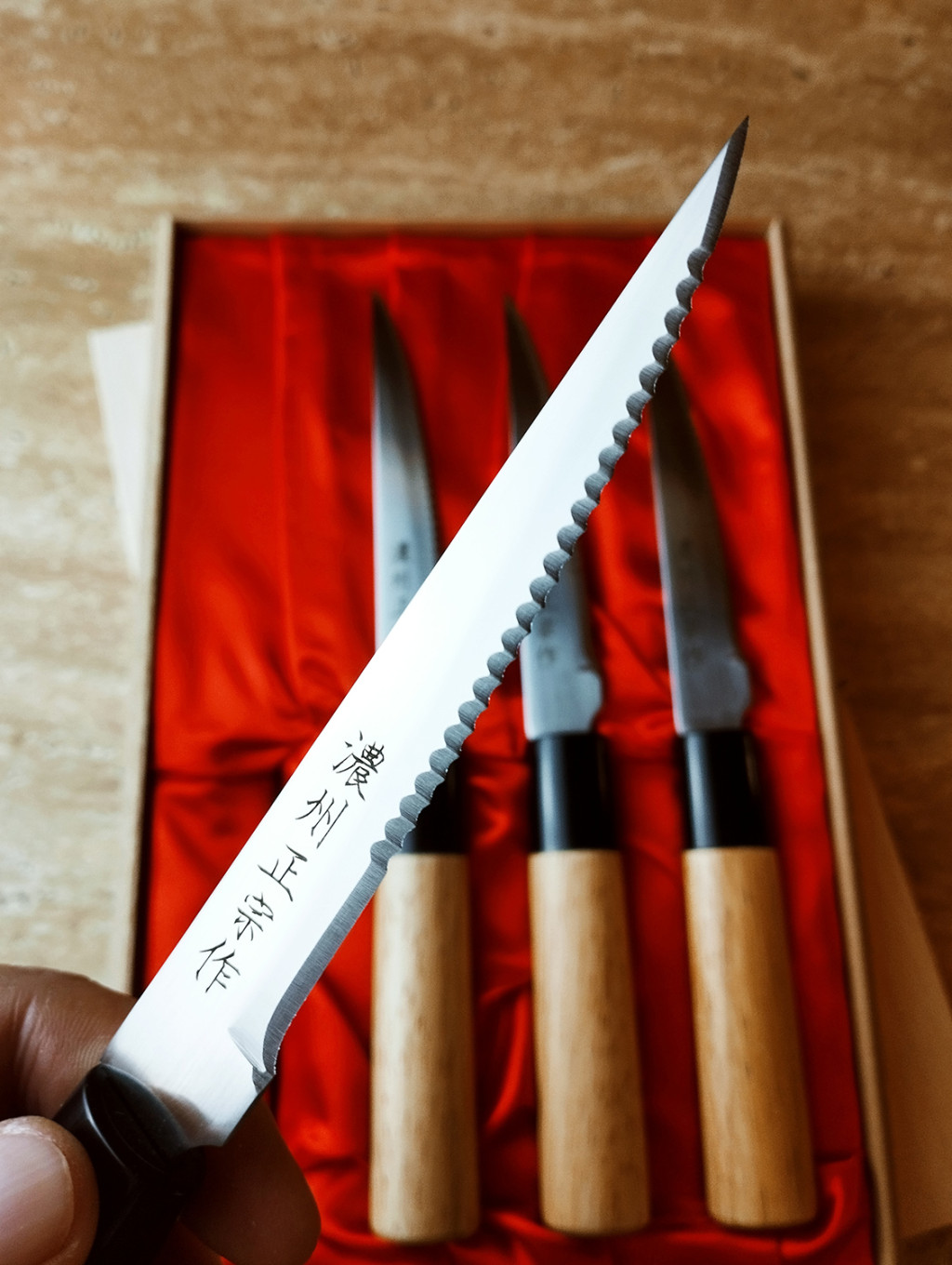
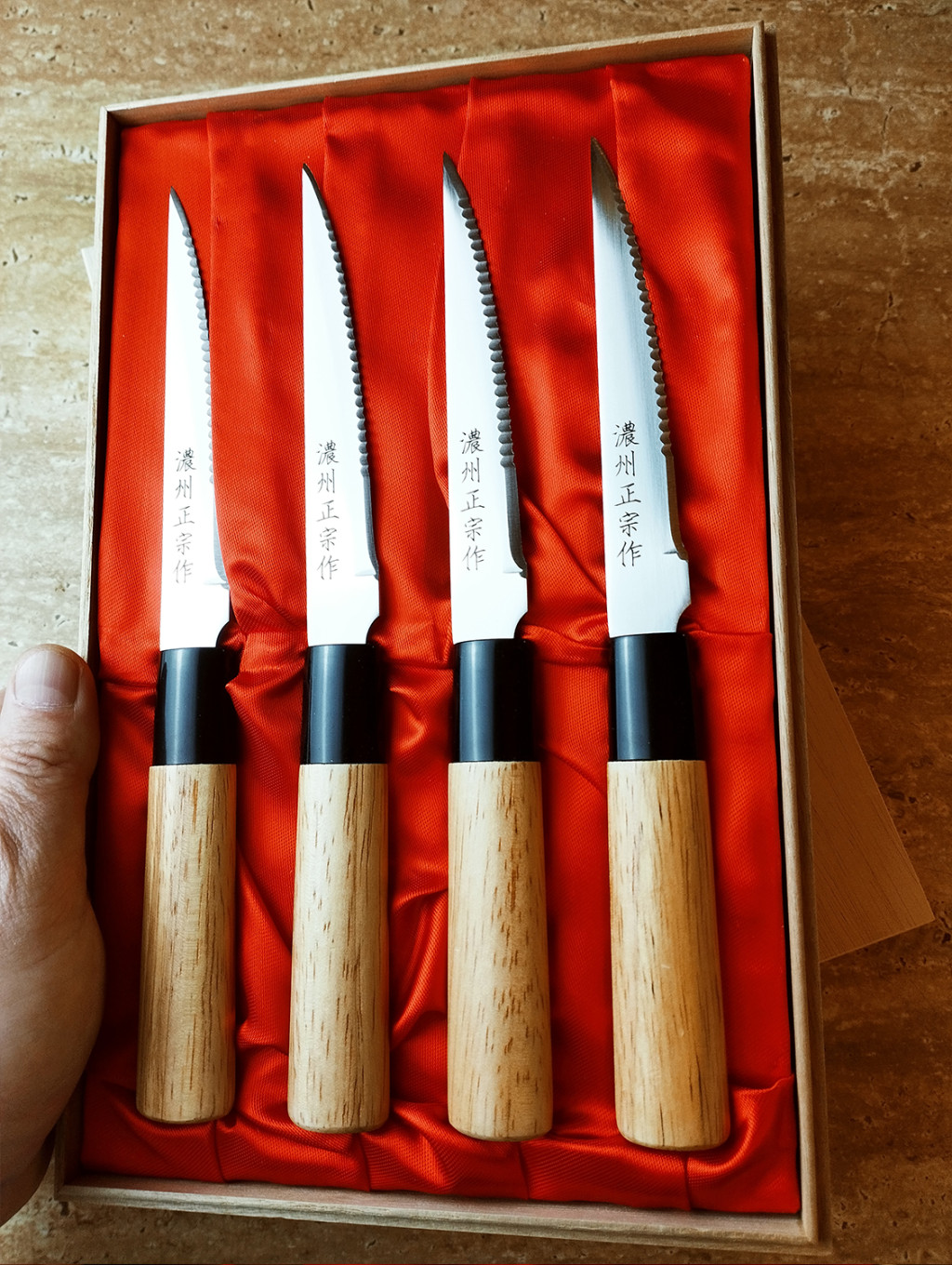
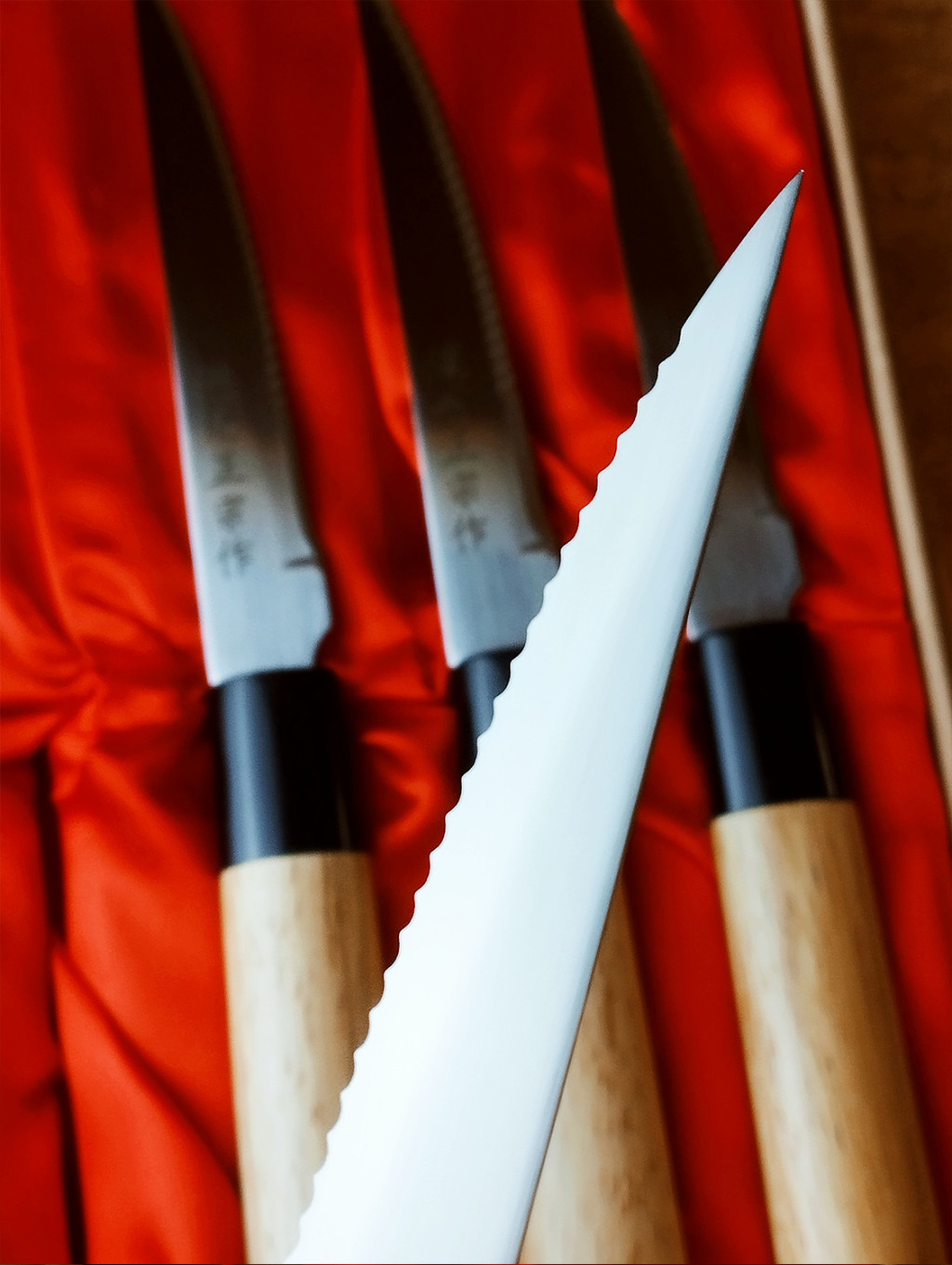
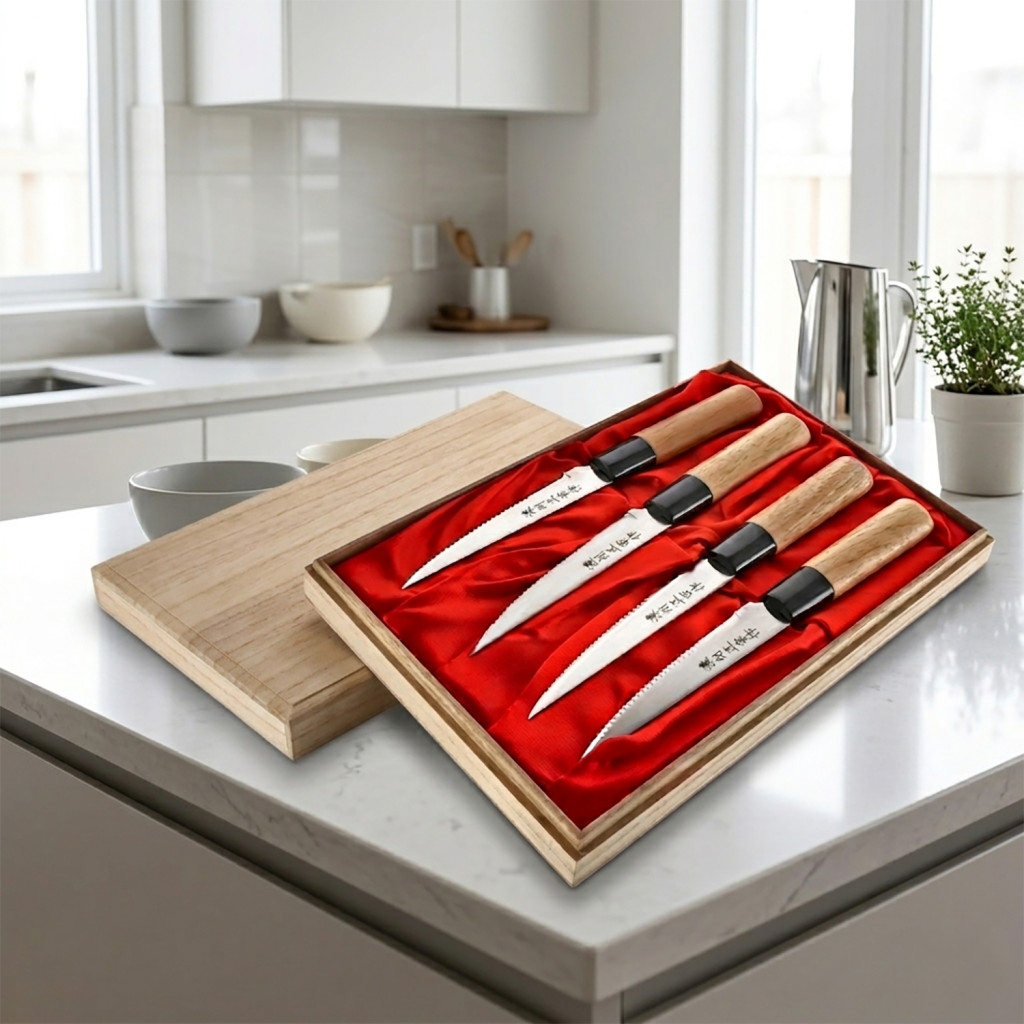
Blade material - U420J2 (Nippon Koshuha) stainless steel
Handle material - rubberwood
Hardness - 56 HRC
Total length - 23.2 cm
Blade length - 12.7 cm
Blade width - 2 cm
Blade thickness - 1 mm
Edge grind - serrated
Weight - approx. 473 g / set, approx. 43 g / pc
Manufacturer: Satake Cutlery Mfg. Co., Ltd. Made in Japan.
Item number: STEAK4P

77 £
Points earned after purchase:
4 £
We also recommend the following product as an accessory
Details
SATAKE MEGUMI STEAK SET - DINING KNIFE - 12.7 CM

ADDITIONAL INFORMATION:
How to use Japanese chef knives correctly? (Click the text to read the article.)
Modern Japanese Knife Making: Tradition Meets Innovation (Click the text to read the article.)
The Satake Japanese steak knife set creates a bridge between professional cutting tools and elegant dining knives.
Steak knife and dining knife: What is the difference?
While a general dining knife often just "crushes" or saws the meat, a true steak knife with its razor-sharp design cuts cleanly through the fibers. This is crucial in gastronomy: if the knife doesn't need to be pressed hard onto the meat, the juices stay inside the slice, keeping the food juicier and more flavorful.
The power of the serrated edge in the kitchen
Although this set was primarily designed for dining, the serrated edge and the special U420J2 Japanese steel provide these knives with properties that make them extremely useful during kitchen preparation as well. The essence of the serrated design is that the tips of the teeth penetrate the material first, allowing them to grip surfaces where a smooth edge would slip.
What other tasks can the set be used for?
- Juicy vegetables and fruits: The 12.7 cm blade is a perfect tomato slicer. The serrated edge immediately breaks through the taut skin of tomatoes or other vegetables without crushing the soft interior.
- Crispy crust baked goods: While it doesn't replace a large bread knife, this size is excellent for clean, crumb-free cutting of baguettes, rolls, or smaller savory pastries.
- Harder-skinned ingredients: Surprisingly effective for slicing citrus fruits (lemon, lime), where the skin's essential oils and hardness often test smooth blades; thus, it can be a great companion even for professional bartenders during cocktail prep.
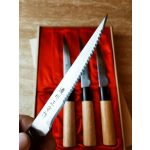
In the spirit of minimalist design, the material of the blade and handle harmonize perfectly, and the set arrives in an elegant wooden box, making it a perfect choice for a gift. The Satake quality guarantees that this Japanese knife set will be a stylish and reliable accessory for family dinners for years to come.
Key features:
- Premium 4-piece set: Stored in an elegant wooden box.
- Serrated edge: Specially designed for precise slicing of steak and roasted meats.
- Japanese steel: High-quality stainless blade for durability.
- Ergonomics: Lightweight design and natural rubberwood handle for a comfortable grip.
- Stylish appearance: Functional and aesthetic dining knife set.
KNIFE STEEL COMPARISON TABLE
|
Steel Type |
Type |
Composition (Main elements) |
Advantages | Disadvantages | Typical Use | Manufacturer |
| AUS-8A | Mid-range stainless steel |
Carbon: 0.70 - 0.75% Chromium: 13.00-14.50% Molybdenum: 0.10-0.30% Vanadium: 0.10-0.26% |
Good corrosion resistance: High chromium content. Easy to sharpen: Average hardness. Adequate edge retention: Perfect for everyday use. Cost-effective: Common choice in mass production. |
General edge retention: Requires normal frequency of sharpening. Lower wear resistance: Compared to harder Japanese steels. |
Kitchen knives. Everyday use pocket knives. Fixed blade knives. |
AICHI - JAPAN |
| FAX-38 |
High-Speed Steel (HSS) Special purpose steel Japanese carbon steel |
Carbon: 1.23-1.33% Tungsten: 5.70-6.70% Molybdenum: 4.70-5.30% Vanadium: 2.70-3.20% Cobalt: 8.00-8.80% |
Excellent wear resistance: Due to high hardness and alloys. Extraordinary edge retention: For demanding cutting tasks. High heat resistance: Retains hardness even at high temperatures.
|
Harder to sharpen: Due to extreme hardness. Higher price: Due to high alloy content and manufacturing technologies. Not stainless: Japanese carbon steel. Recommended for expert hands! |
Professional chef knives. Specialty knives where edge retention is key. Industrial cutting tools (e.g., drills, cutters). |
NACHI FUJIKOSHI - JAPAN |
| MVS10Cob (DAMASCUS) | Cobalt-alloyed stainless steel |
Carbon: 1.00% Chromium: 14.27% Cobalt: 1.34% Molybdenum: 0.96% Vanadium: 0.21% |
Good edge retention: Due to cobalt content. Adequate corrosion resistance: Through the alloys. Balanced performance: For professional knives. Good toughness: Often compared to VG10 due to similar composition. |
Currently only available in damascus version. More expensive than simpler stainless steels. |
High-end kitchen knives. Quality pocket knives. General purpose knives where a durable edge is needed. |
NACHI FUJIKOSHI - JAPAN |
| U420J2 | Low-carbon stainless steel |
Carbon: 0.15-0.36% Chromium: 12.00-14.00% Manganese: 1.00% Nickel: 1.00% Silicon: 1.00% Sulfur: 0.03% |
Excellent corrosion resistance: High chromium content. Easy to sharpen: Relatively soft. (Compared to other Japanese steels.) Very flexible: Hard to break. Cost-effective: Basic Japanese stainless steel. |
Frequent sharpening: Compared to harder Japanese steels. |
Basic (home) kitchen knives. Diving knives (high corrosion resistance). Food industry tools. |
NIPPON KOSHUHA - JAPAN |
| Japanese carbon steel (Traditional) |
Carbon: 1.25-1.35% Manganese: 0.20-0.30% Phosphorus: 0.02% Silicon: 0.010-0.20% |
Extreme sharpness: Very fine grain structure and high carbon content. Easy to sharpen: Often sharper than many stainless steels. Excellent cutting performance: Base material for traditional Japanese knives. Patina formation: A characteristic surface develops over time. |
Prone to rusting: No chromium content. Maintenance intensive: Requires careful cleaning and storage. Recommended for expert hands! |
High-quality Japanese kitchen knives. Razors. Applications where sharpness is paramount and maintenance is not an issue. |
HITACHI - JAPAN |
Bundle offers
Reviews
Be the first to write a review!
Similar products